
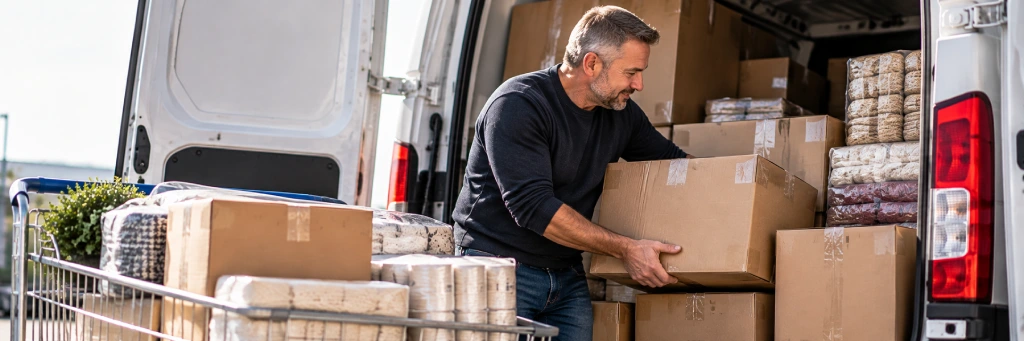
For any business that sells products or uses consumables, procurement has a direct impact on profitability. The purchase price, how often you order and the amount of stock kept in storage can make the difference between a balanced cash flow and costs that are hard to control. Buying wholesale is a way for companies to obtain better unit prices and organise their stock more efficiently.
Buying in bulk is one of the solutions most often used by retailers, restaurants and resellers. In the guide below you will find the main benefits of buying wholesale, the risks to take into account and how to organise your purchasing in a practical way.
What do wholesale buying and efficient procurement mean?
Wholesale buying means purchasing products in large quantities, usually from manufacturers or distributors, at a lower unit price than in retail. It differs from retail buying, in which products are sold in small quantities to the end consumer at a higher unit price.
A third model is cash & carry: the professional chooses the products directly on the sales floor, pays for them and takes them away immediately, without waiting for a delivery.
Efficient procurement is the process by which a business secures the stock it needs at the right time, in the right quantity and at the best possible cost. A well-designed strategy prevents money from being tied up in excess stock, reduces the risk of running out of products and limits the administrative and logistics costs generated by frequent, small-volume orders.
The benefits of buying wholesale: lower costs and more predictability
The financial impact is usually the main reason businesses choose high-volume purchasing. The effects go beyond immediate savings and can also support long-term planning.
- Lower unit prices: By buying in large volumes, you are more likely to get a lower unit price. The size of the discount varies by product, quantity and supplier, so it is worth comparing offers.
- Flexibility in setting selling prices: A lower purchase cost gives you more options: you can pass some of the savings on to customers or keep your usual prices. The final effect depends on the market, the competition and product turnover.
- Optimised logistics costs: Fewer but larger orders can reduce transport costs and the administrative expenses associated with each transaction.
Example (the figures are hypothetical and do not represent prices from any commercial complex): a small catering business uses 20 litres of sunflower oil every week. At a retail price of 10 lei/litre, the cost is 200 lei per week. If it bought a 100-litre drum at 7 lei/litre, it would pay 700 lei upfront, but the cost per litre would drop by 30%, which would mean a saving of around 3,100 lei a year on this product alone. A 100-litre drum, however, covers about five weeks of use, so there must be suitable storage space, and the capital stays tied up in stock during this period.
Operational benefits: simpler procurement and better stock control
The benefits of buying wholesale also include operational ones, which simplify workflows and save time. Ordering less often means fewer invoices to process, fewer payments to make and fewer deliveries to receive.
This consolidation simplifies logistics and lets employees focus on higher-value activities.
Secondly, buying in larger quantities gives you better control over stock. The risk of running out of essential products (a stockout), which can lead to lost sales, drops noticeably. Constant, predictable stock provides operational stability and builds customer confidence.
Wholesale shopping at Doraly: what you will find and how to prepare your visit
For businesses in Bucharest and the surrounding counties, finding the right suppliers can take time. The Doraly commercial complex, located in Afumați, Ilfov County, brings together wholesale, retail and cash & carry stores. Having many retailers in the same place can shorten your search time, because you can compare offers and products without visiting several distributors separately.
Categories include food and drinks, homeware, textiles, cosmetics and personal care products, stationery, toys and electronics. With the cash & carry model, the process is straightforward: you choose the goods, pay for them and take them away on the spot. At Doraly Expo Market, as in any complex with many retailers, purchasing terms, payment methods, invoicing and opening hours vary from one retailer to another, so you can confirm them directly with each of them before you travel.
Who can use the offer of a complex with several retail formats?
Depending on the retailers present and the products available, the types of businesses that can find supplies here include:
- Small retailers and convenience stores: They can top up their stock with consumer goods, from food and drinks to cleaning products and cosmetics.
- HoReCa businesses (hotels, restaurants, catering): They can look for food products, homeware and other consumables, depending on each retailer’s offer.
- Online resellers: They can browse a wide range of product categories to find items suitable for their store, from accessories and textiles to electronics or decorations.
- Event organisers and guesthouses: They can look for decorations, textiles, stationery or household items for their business.
Strategies for optimising costs and managing stock
For the benefits of bulk buying to show up in your results, you need an organised approach. Here are a few practical suggestions:
- Plan your purchases: Analyse historical sales data to anticipate demand and avoid overstocking perishable or slow-moving products. Set a budget and a shopping list before each visit.
- Monitor your stock: Use a simple tracking system that shows which products need to be ordered and in what quantities. This way you avoid tying up capital and incurring losses.
- Negotiate from an informed position: Larger volumes can give you a stronger negotiating position. Ask about discounts for larger quantities, compare offers from several retailers and build long-term relationships with suppliers.
Preparing your visit also matters. To make good use of your time at the complex, you can consult the Doraly shopping guide beforehand, which helps you find your way around and identify the retailers relevant to your sector more quickly.
Logistics and tax considerations in wholesale procurement
Switching to high-volume purchasing involves a few practical decisions. From a logistics point of view, check whether you have suitable storage space where products can be kept in the right conditions and stock can be managed easily. Also plan how the goods will be transported from the complex to your premises, taking the larger volumes into account.
Large stocks also need a record-keeping method. The FIFO (First-In, First-Out) principle is especially useful for products with a limited shelf life: the oldest goods are sold first and losses go down. Even for small businesses, a well-structured spreadsheet or stock management software gives a clear picture of inventory levels, reorder points and turnover rates.
From a tax point of view, ask for an invoice for your purchases. The invoice is the document that allows the expense to be recorded in the accounts and, depending on the company’s tax situation, VAT to be deducted, which is why it is worth discussing your case with your accountant. Documents accompanying the goods, such as invoices and delivery notes, are also important for accurate records and for any inspections. One risk associated with high-volume purchasing is tying up capital in goods, which can be limited through careful planning of demand and cash flow.
A long-term relationship with suppliers, based on timely payments and transparent communication, can sometimes lead to better terms, for example more flexible payment terms. These are negotiated case by case and are not guaranteed.
Conclusion
The benefits of buying wholesale come down to lower unit costs, fewer orders and better stock control, provided there is planning, storage space and a clear record of demand. Each business has to work out for itself where the advantage of volume ends and the risk of overstocking begins.
Before your first large purchase, compare offers from several retailers, start with moderate volumes and confirm prices, documents and opening hours with each supplier.
Frequently asked questions
What are the main advantages of buying wholesale for businesses?
The advantages are both economic and operational: lower unit purchase prices, reduced logistics costs, better stock control and simpler procurement. The size of these advantages depends on the product, the volume and the supplier.
How does buying wholesale affect procurement efficiency?
It reduces the number of orders, which means less time spent on administrative tasks, consolidated transport and more predictable stock levels.
What types of businesses can use wholesale purchasing?
Any business that sells or uses physical products can consider this option: retail stores, HoReCa businesses, online resellers, event companies or service providers that need consumables. It is worth checking whether the products you need are available from the retailers.
How do I find reliable wholesale suppliers for my business?
A practical approach is to visit a complex with several retailers, where you can talk directly to their representatives, assess the products and compare offers. Ask for written quotes, check the delivery documents and, if needed, start with smaller orders.
What are the risks of buying wholesale and how can they be limited?
The main risks are overstocking, tying up capital in slow-moving stock and products expiring. They can be limited by analysing sales data, planning purchases and starting with moderate volumes for new products.
How can I negotiate better prices when buying wholesale?
Negotiation relies on volume, purchase frequency and your relationship with the supplier. Be prepared to discuss volume discounts and payment terms, comparing several offers before deciding.
Why choose a commercial complex for procurement?
Such a complex brings together several retailers from different sectors in one place, so you can compare offers in a single trip. The cash & carry model adds the advantage of taking the goods away immediately, with no waiting time for delivery.

